





•New

Share


Paper published in the journal 'Physical Chemistry Chemical Physics'
How does cocaine reach the brain?
Working in collaboration with researchers at the University of Oxford, Luis Carlos Pardo, a researcher with the Materials Characterisation Group of the UPC, has discovered the mechanism that enables cocaine to cross the brain’s protective membrane. This pioneering study paves the way for the design of more effective drugs for treating brain diseases.

18/04/2016
The research may aid in the design of new drugs for treating brain diseases and protecting the brain by preventing the entry of toxic substances like cocaine that have the ability to cross the blood-brain barrier.
Using a technique known as neutron diffraction, researchers Luis Carlos Pardo, of the UPC; Sebastian Busch, of the German Engineering Materials Science Centre (GEMS), Germany and Andrew Johnston, and Sylvia McLain, of the University of Oxford, have learned more about the atomic scale structure of the cocaine molecule’s water shell. The research conducted by the team has revealed why cocaine, unlike other molecules, is able to directly and effectively cross the blood-brain barrier, which protects the brain from toxic substances.
The researchers found that the molecule can adapt to environments that are hydrophilic (have an affinity with water) and those which are hydrophobic (tend to repel or fail to mix with water) by changing its properties according to its surroundings (i.e. whether or not water is present).
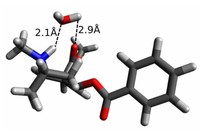
The study, which has been published in the scientific journal Physical Chemistry Chemical Physics, shows how cocaine is able to move through the bloodstream due to its hydrophilic properties. The molecule dissolves in water because it is able to anchor water molecules around itself by forming hydrogen bonds.
 The investigation also answers the question of how the molecule is able to adapt to hydrophobic environments like those in the brain’s protective barrier, which a hydrophilic molecule should not be able to pass through. In this setting, the molecule uses its hydrophobic properties to attach itself to the fat in the blood-brain barrier, in effect “hiding” the hydrophilic units that would otherwise prevent it from entering such environments.
In other words, when cocaine is in an environment hostile to water molecules, it folds up its chemical anchors to water in a way that allows it to “pass for” a hydrophobic molecule. What the researchers discovered is that cocaine uses a water molecule to bind together these chemical anchors.
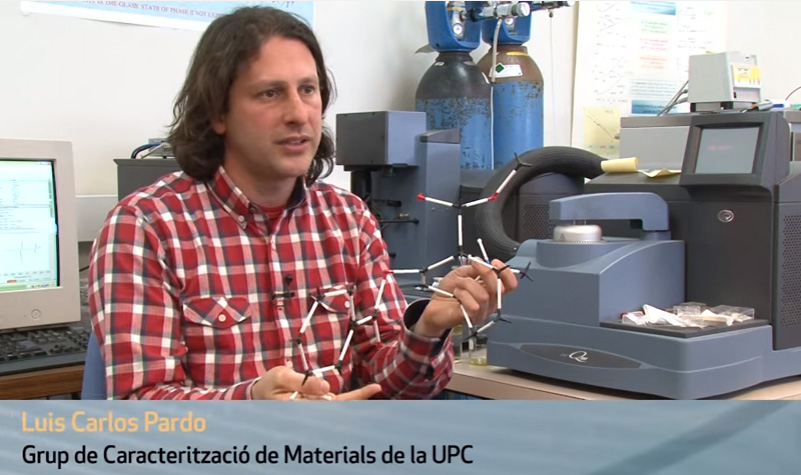
To reach this conclusion, researcher Luis Carlos Pardo of the UPC’s Barcelona School of Industrial Engineering (ETSEIB) designed a computer program called Angula and used it to analyse millions of data points generated by the neutron diffraction experiment. The many simulations analysed using the program provided information on how cocaine molecules are arranged when mixed with water.
The neutron diffraction experiments were carried out using the ISIS neutron source by researchers at the University of Oxford, led by Sylvia McLain. The researchers used numerical techniques that make it possible to perform a computer analysis of the molecules used. If the structure generated by the computer explains the experimental results, it is deemed to be correct.
Using a technique known as neutron diffraction, researchers Luis Carlos Pardo, of the UPC; Sebastian Busch, of the German Engineering Materials Science Centre (GEMS), Germany and Andrew Johnston, and Sylvia McLain, of the University of Oxford, have learned more about the atomic scale structure of the cocaine molecule’s water shell. The research conducted by the team has revealed why cocaine, unlike other molecules, is able to directly and effectively cross the blood-brain barrier, which protects the brain from toxic substances.
The researchers found that the molecule can adapt to environments that are hydrophilic (have an affinity with water) and those which are hydrophobic (tend to repel or fail to mix with water) by changing its properties according to its surroundings (i.e. whether or not water is present).
The study, which has been published in the scientific journal Physical Chemistry Chemical Physics, shows how cocaine is able to move through the bloodstream due to its hydrophilic properties. The molecule dissolves in water because it is able to anchor water molecules around itself by forming hydrogen bonds.
The investigation also answers the question of how the molecule is able to adapt to hydrophobic environments like those in the brain’s protective barrier, which a hydrophilic molecule should not be able to pass through. In this setting, the molecule uses its hydrophobic properties to attach itself to the fat in the blood-brain barrier, in effect “hiding” the hydrophilic units that would otherwise prevent it from entering such environments.In other words, when cocaine is in an environment hostile to water molecules, it folds up its chemical anchors to water in a way that allows it to “pass for” a hydrophobic molecule. What the researchers discovered is that cocaine uses a water molecule to bind together these chemical anchors.
To reach this conclusion, researcher Luis Carlos Pardo of the UPC’s Barcelona School of Industrial Engineering (ETSEIB) designed a computer program called Angula and used it to analyse millions of data points generated by the neutron diffraction experiment. The many simulations analysed using the program provided information on how cocaine molecules are arranged when mixed with water.
The neutron diffraction experiments were carried out using the ISIS neutron source by researchers at the University of Oxford, led by Sylvia McLain. The researchers used numerical techniques that make it possible to perform a computer analysis of the molecules used. If the structure generated by the computer explains the experimental results, it is deemed to be correct.
+information:
Video How does the cocaine reach the brain? [in catalan]
Paper On the atomic structure of cocaine in solution published in Physical Chemistry Chemical Physics
Article El disfraz de la cocaína, by Luis Carlos Pardo
McLain research group, Oxford University.
Video How does the cocaine reach the brain? [in catalan]
Paper On the atomic structure of cocaine in solution published in Physical Chemistry Chemical Physics
Article El disfraz de la cocaína, by Luis Carlos Pardo
McLain research group, Oxford University.
Follow us on Twitter